The blue gold rush: Chile’s $24B desalination strategy
Chile is currently navigating a paradigm shift in its water management strategy. A "mega-drought" lasting over 13 years has pushed the country toward a critical realization: continental water resources are no longer sufficient to sustain both its population and its primary economic engine, mining. In response, Chile has turned to the Pacific Ocean, launching a massive infrastructure pipeline of 51 new projects representing a total investment of over $24 billion.
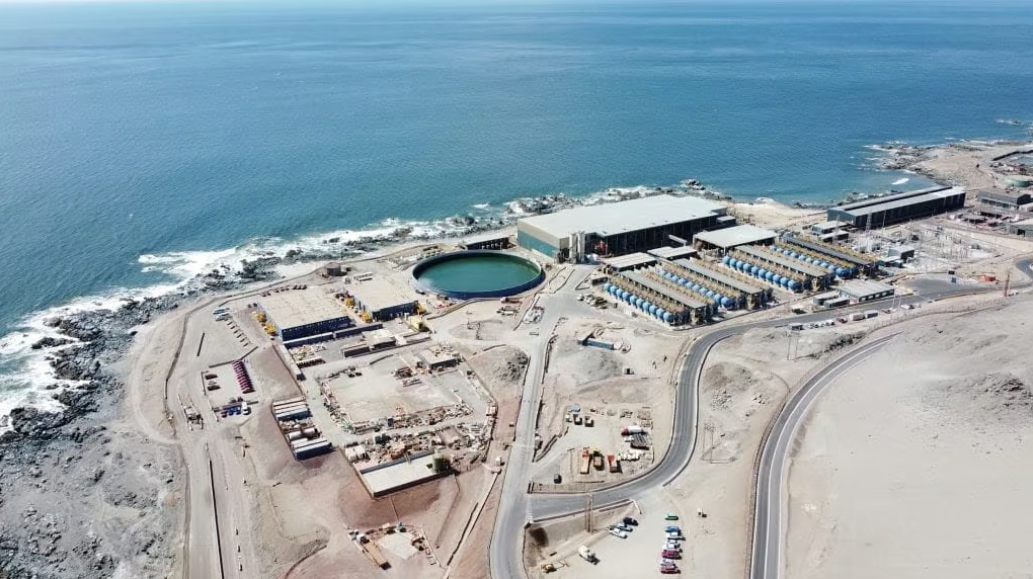
Chile’s mining sector is driving a “desalination boom” along its 4.300 km Pacific coastline
Key takeaways
Mining as the driving force and principal beneficiary: the mining sector is the main architect of this "desalination boom". Facing regulatory mandates to limit continental water use to just 10% in 2025, companies like BHP and Antofagasta Minerals have pivoted toward the sea to ensure operational continuity. A necessary shift as ore grades decline and processing requires significantly more water precisely when aquifers are most depleted. By 2034, it is projected that 70% of all water used in copper mining will come from desalinated or raw seawater.
Transport, not technology, is the real hurdle: while reverse osmosis technology is now considered a mature and efficient process, the true strategic challenge for Chile lies in logistics and energy. Pumping water from the coast to mines located between 2,000 and 4,000 meters above sea level is a colossal engineering feat. It can cost three times more than the desalination plant itself, with energy consumption accounting for approximately 70% of total operating costs. To mitigate these costs, the industry is shifting toward "shared infrastructure" models and innovative "water swaps" to improve regional efficiency.
A milestone in regulatory certainty: for years, the sector operated under a fragmented legal framework, causing permitting bottlenecks that could last up to six years. The January 2026 approval of a new National Desalination Strategy (Bulletin 11608) finally provides legal certainty by establishing a clear 30-year concession regime and empowering the General Water Directorate (DGA) to oversee the industry. Crucially, the law also prioritizes human consumption, attempting to bridge the gap between industrial needs and social stability.
Environmental and social friction: despite the economic promise, the "boom" faces significant headwinds. Environmentally, the disposal of brine (high-salinity waste) remains a primary concern for marine ecosystems and local fishing communities. Socially, the high cost of desalinated water - which can be ten times more expensive than groundwater - remains a barrier for small-scale agriculture, creating a "water inequality" where only large-scale mining can afford the transition.
Future developments: looking ahead, 2026 is ushering in an era of multi-purpose infrastructure designed to share CAPEX across mining and urban supply. This demand is further accelerated by the green hydrogen nexus, which requires high-purity water for electrolysis, while the new law simplifies permitting to cut down the standard six-year development cycle.