Panama’s $8.5B bet: securing the future of global trade
The Panama Canal Authority (ACP) has officially launched its "Transformation Decade," a 10-year Master Plan designed to evolve the waterway from a maritime passage into a diversified global logistics and energy hub. This $8.5 billion overhaul is a direct response to climate volatility and shifting global trade patterns, with several critical milestones set for 2026.
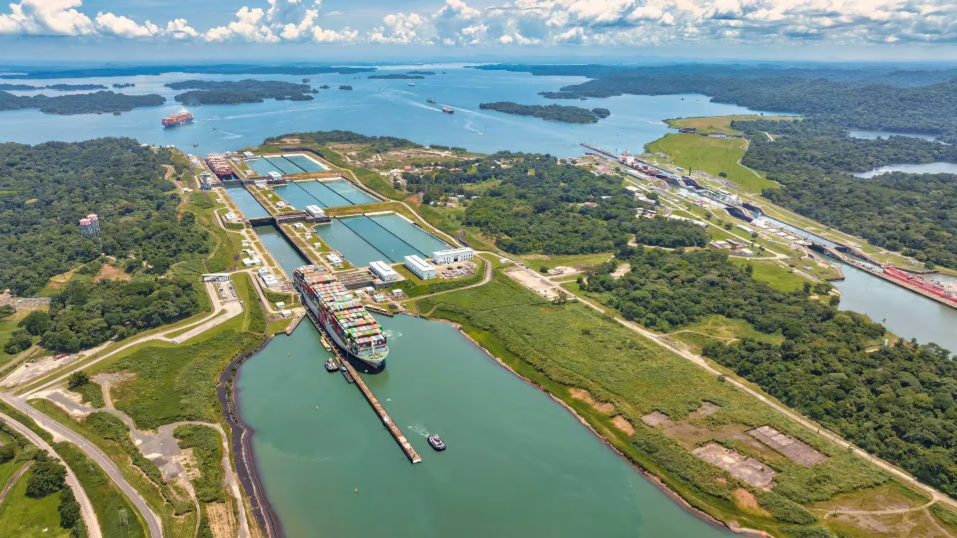
The Panama Canal Authority plans to invest $8.5 billions in a major overhaul over the next ten years.
The interoceanic energy corridor, a $2bn+ game changer: the most ambitious pillar of the new strategy is the construction of a 76-kilometer gas pipeline connecting the Atlantic and Pacific coasts. The goal: The goal is to decouple energy transport from water constraints. The pipeline will move up to 2.5 million barrels of energy products per day (LPG, LNG, butane, propane), freeing up valuable transit slots in the locks for container ships. The ACP has initiated dialogues with international players, with the tendering process for the pipeline scheduled for Q2 2026. This project alone is expected to generate $35 billion in revenue by 2050.
Capturing the "transshipment" value through port expansion: Panama is aggressively expanding its land-side infrastructure to handle the next generation of ultra-large vessels. The plan includes two new major container terminals - Corozal (Pacific) and Telfers (Atlantic) - adding approximately 5.5 million TEUs of annual capacity. These ports will be linked via a "dry canal" (rail and road system), strengthening the competitiveness of the western bank and creating a multimodal hub.
Securing water resilience: to guarantee the 36 daily transits required for global reliability, the ACP is fast-tracking the Rio Indio Reservoir project ($1.6 billion). Beyond the dam, the project includes a massive social investment program for the 2,500 residents in the basin, setting a new international benchmark for "inclusive infrastructure." Final design tenders are expected by late 2026, with construction beginning in 2027 to ensure the Canal remains "drought-proof" for the next 50 years.
Digital and green excellence: approximately $1 billion of the Master Plan is dedicated to digital transformation and decarbonization. Through the EU Global Gateway partnership, Panama is developing "Green Shipping Corridors," providing incentives for vessels using alternative fuels and utilizing AI-driven scheduling to maximize water efficiency.
💡Key takeaways
2026 is the "year of tenders": for engineering, construction, and finance firms, the Q2 2026 tenders for the pipeline and ports represent the largest infrastructure opportunity in the region since the 2016 expansion.
Operational certainty: the shift toward a pipeline-and-port model means the Canal's reliability will soon be less dependent on rainfall. Shippers can expect more stable scheduling as energy products move to the "dry" route.
The "hub" effect: Panama is positioning itself as the primary distribution node for the Americas. Businesses should look to secure space in the emerging logistics corridors now, before the 2029 port completions trigger a surge in land value.