Argentina: A Tale of Two Economies
Over the past few months, some of Argentina's macroeconomic figures have looked better than they have in years. Poverty fell to 28.2% in the second half of 2025, a seven-year low. The trade balance posted a record surplus in March, with agri-export settlements up 57% year-on-year. Inflation, while stubborn, is a fraction of what it was eighteen months ago. These are positive figures for the country and the Milei government who has pledged to turn around Argentina’s economy.
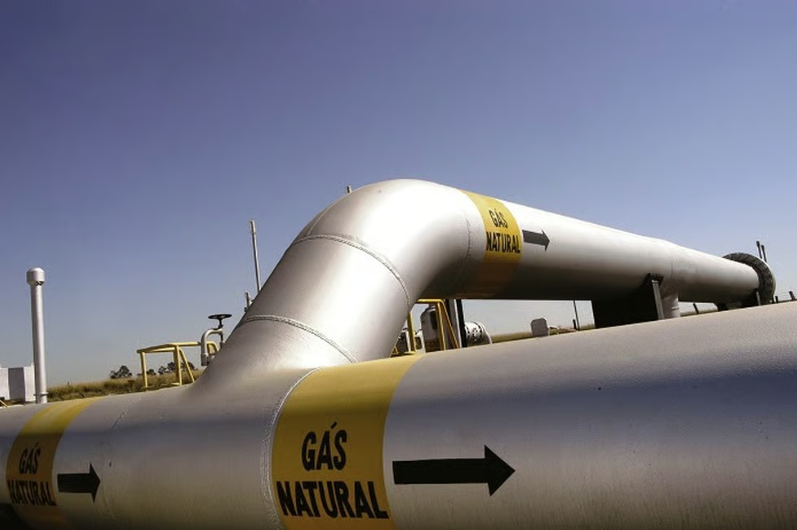
Argentina’s hydrocarbons industry is a source of optimism and opportunities for the country but can it really benefit the internal economy?
However, other figures tell a different story when it comes to the internal dynamics of the Argentine economy. The monthly activity index fell 2.6% in February relative to January — the steepest monthly drop since late 2023 — and contracted 2.1% year-on-year. Manufacturing output fell 8.7% while consumer confidence recorded its third consecutive monthly decline in April, dropping more than 10% year-on-year. Supermarket sales and shopping mall revenues are down. SanCor, a dairy cooperative founded in 1938 that survived hyperinflation, convertibility, and the 2001 default, filed for bankruptcy in April with liabilities of approximately US$120 million and debts owed to over 1,500 creditors.
These are not contradictory signals. They are two sides of the same structural reality.
The Missing Link
The Milei administration's economic model is explicit in its design: anchor the peso, compress domestic demand, and let competitive sectors (agriculture, energy, mining) generate the foreign currency the economy needs. The logic is not without merit. Argentina has genuine comparative advantages in all three sectors, and the export results this year reflect that.
The problem is what happens next: export revenues do not automatically translate into domestic economic activity. For that to occur, there needs to be a transmission mechanism — through wages, local supply chains, consumer spending, or public investment — that converts external earnings into internal demand.
That mechanism is currently absent, or too weak to offset the compression elsewhere. As economist Diego Dequino noted recently, the one sector that has historically managed this transmission is agriculture, which over 150 years built the institutional, geographic and economic networks that connect commodity earnings to local communities. Energy and mining, by contrast, are capital-intensive, enclave-oriented, and generate limited downstream employment.
In the meantime, the domestic-facing economy is absorbing the full weight of the adjustment. The textile sector is operating at around 37% of installed capacity; 333 textile companies closed between December 2023 and August 2025, eliminating 14,000 jobs. FATE, an 86-year-old Argentine tyre manufacturer that once exported to Europe and the United States, shut its San Fernando plant in February 2026 with the loss of 920 jobs. The proximate cause was a tariff cut on imported tyres from 35% to 16%, which allowed Chinese imports — now accounting for roughly 60% of the market — to undercut local production. Whirlpool closed its Pilar plant shortly before.
These are not isolated events. They are symptoms of the same structural shift happening in Argentina: import liberalisation combined with compressed domestic demand is eroding productive capacity at a pace that policymakers have not yet publicly acknowledged. Some of this rationalisation was probably inevitable. In the case of Whirlpool, the US company had plans to consolidate its manufacturing activity in Brazil. The liberalisation of imports in Argentina certainly accelerated this decision. The question is whether the pace of this structural shift allows for orderly adjustment or risks permanently damaging the national industrial base.
The Investment Calculus
For investors, the bifurcation creates a clear framework, if not a comfortable one. Argentina remains investable but selectively so. Sovereign debt has benefited from the improvement in the fiscal and external accounts. The RIGI (Large Investment Incentive Regime) has attracted genuine interest in energy and mining, offering long-term legal guarantees that are, for now, credible. Agri-export-linked assets continue to perform. Vaca Muerta's energy surplus is projected to exceed US$10 billion for 2026.
Exposure to the domestic economy is a different proposition. Retail, consumer goods, domestic manufacturing — these sectors face a double bind: weakened purchasing power and intensified import competition. The consumer confidence index suggests this is not a temporary hesitation. It is an entrenched caution driven by real wage erosion (public sector wages are approximately 30% below 2017-2018 levels in real terms) and by the uncertainty that prevents households from mobilising savings into consumption or investment.
🔎 What to watch
The critical variable is whether — and how quickly — the external surplus begins to generate internal multiplier effects. An upcoming test will be the evolution of informal wages, which had been recovering faster than formal wages through 2024 but appear to have plateaued in mid-2025. A second indicator is industrial capacity utilisation: if it remains below 55% through mid-2026, the hysteresis risk becomes harder to dismiss.
Argentina's external position has been genuinely repaired. Whether that repair reaches the domestic economy before the political patience runs out remains the central open question.