Life After Maduro: Venezuela’s Economic Re-opening
In the past few weeks, the pace of change has been striking in Venezuela. Last week, the IMF resumed formal relations with Caracas for the first time in seven years, while major energy companies are signing new deals and airlines are restoring flights. The economic opening is real and it is moving fast. However the perspective of new elections and a real political change is still a long way to go.
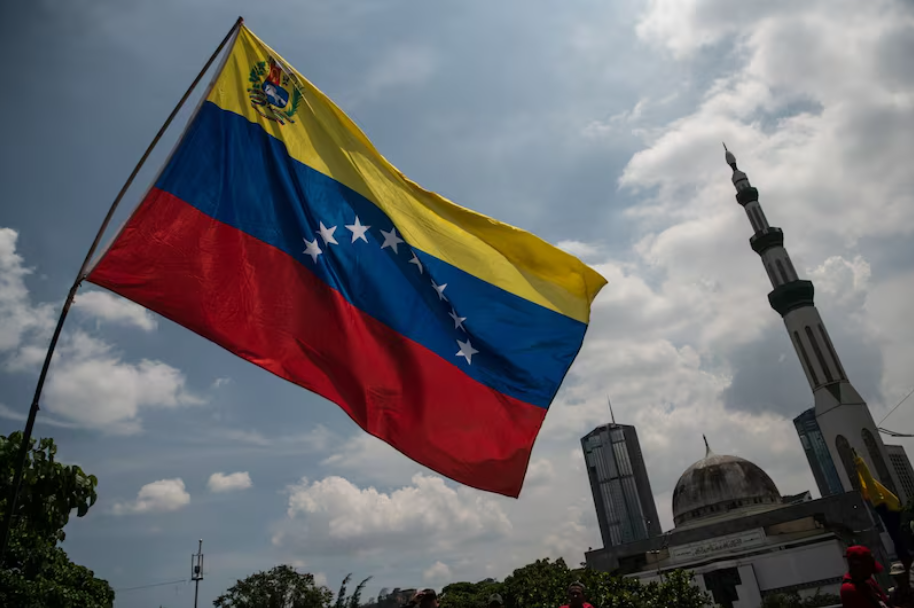
Venezuela is experiencing major changes in the past few weeks - Photo: Carlos Becerra/Bloomberg
On April 17, the IMF announced it was resuming formal relations with Venezuela under the administration of acting President Delcy Rodríguez, ending a seven-year freeze that had effectively excluded the country from the international financial system. The World Bank followed on the same day. US Treasury Secretary Scott Bessent publicly endorsed the move at the IMF spring meetings, stating the Fund was working to bring Venezuela back and "make it look like a normal economy". Delcy Rodríguez described the development as "a very important step" and thanked Trump, Rubio, Brazil, the UAE, and Qatar by name.
The IMF recognition is a major step forward for Venezuela’s recovery. It functions as a credibility signal for institutional investors and multinational companies. It does not unlock financing automatically as any formal programme would require a request from Caracas and agreement on economic reforms. However it removes a procedural barrier that had made Venezuela effectively uninvestable for most of the past decade. The resumption of dealings also clears the path to Venezuela's frozen Special Drawing Rights, billions of dollars in reserves allocated during the Covid pandemic that the country has been unable to access. For a government managing severe inflation and frozen public sector wage, that liquidity matters.
The investment wave already underway
In Venezuela, capital and connectivity are returning faster than most analysts expected, according to several announcements the past few weeks. One of the good signs is that several airlines are resuming flights to Caracas, including Iberia and American Airlines. The airport in Caracas — for years a symbol of the country's isolation — is visibly coming back to life. On the energy side, Chevron expanded its stake in a major Orinoco Belt joint venture to 49%, gaining rights to develop a second area — an agreement announced in Caracas in the presence of the US Deputy Secretary of Energy. Furthermore Spanish oil company Repsol has agreed to resume operations and triple production under a new deal with PDVSA. ConocoPhillips has sent a team to explore a potential return after being expropriated under Chávez. GE Vernova is shipping power generation equipment while Siemens is reportedly developing proposals for grid reconstruction. The Venezuelan government has also opened talks with the EU on possible participation in the energy sector recovery.
The pattern is consistent: US-aligned energy and infrastructure companies are moving first, using Washington's progressive sanction relief as cover. The production numbers reflect the momentum. Venezuela reported oil output of 1.095 million barrels per day in March, up 75,000 barrels from the prior month and well above the 893,000 barrels recorded in 2024. The national production target of 1.3 million bpd by late 2026 or early 2027 is no longer implausible if reform pace holds and power infrastructure stabilises. US crude imports from Venezuela increased more than 150% in March compared to December. That trajectory is being accelerated by the Iran conflict, which has tightened global oil supply and raised the strategic value of Venezuelan barrels for Washington.
Beyond oil, the Rodríguez government has moved quickly to signal openness across sectors. It has rewritten both the Hydrocarbons Law and the Mining Law to facilitate foreign investment, and the US has lifted sanctions on the Central Bank and three state-owned commercial banks — allowing dollar-denominated transactions that had been frozen since 2019. Analysts describe Rodríguez's position as resembling "a probationary arrangement, with the United States acting as a distant parole officer" — a formulation that captures the asymmetry of the relationship without overstating its stability.
There is also a potential Mercosur dimension worth watching. Paraguay is actively pushing for Venezuela's suspension from the bloc to be lifted, arguing that reintegration would benefit regional trade. If that effort succeeds, it would also have implications for the EU-Mercosur agreement entering provisional force in May, potentially opening a further channel for European companies.
The unresolved political question
The economic opening is real but so far the political framework is not. The main opposition coalition has unified behind María Corina Machado as its presidential candidate and is calling for elections under international guarantees, with independent electoral oversight and the restoration of political rights suspended in recent years. Machado estimates a credible electoral process could be completed in nine to ten months. Trump, however, has said Venezuela "wouldn't know how to have an election right now", placing his backing squarely behind Rodríguez — who has since announced her own presidential candidacy. Washington and the opposition are not aligned on the electoral calendar, and that gap is consequential.
The US has indicated it wants a new electoral board to oversee the next Venezuelan vote, but has not specified a timeline. In the meantime, Machado remains abroad, unable to return to Venezuela without risk of arrest. Economist Ricardo Hausmann has been direct on the implications: if Trump says he has Venezuela under control, he must guarantee Machado's freedom and security. Her continued absence, he argues, is evidence that the authoritarian system remains operationally intact beneath the economic reforms.
The opacity of the oil sector compounds the uncertainty. According to Ronald Balza, the dean of economics at the Catholic University of Caracas, the activities in the sector are nearly impossible to verify from the outside, and the US has not made transparent, regular payments for Venezuelan oil — making forecasts on prices, employment, and public expenditure unreliable. Venezuela has not completed an IMF Article IV review since 2004, has not released official inflation figures since October 2024, and its public debt stands at roughly 180% of GDP. The IMF's re-engagement is a necessary first step — it is not a clean bill of health.
🎯 Strategic perspective
Venezuela is entering a period of economic normalization driven primarily by Washington's strategic interest in its oil, accelerated by the Iran conflict and global supply constraints. For companies and investors, the IMF signal materially changes the risk calculus: sovereign credibility is being rebuilt from a low base, sanctions are being progressively lifted, and major US and European operators are re-engaging. The sectors most immediately relevant are energy, power infrastructure, mining, and aviation connectivity — all areas where the pace of deals in the past two weeks has been notable.
The conditions attached to this opening, however, are Washington's, not Caracas's. The question for the next six months is whether the political transition keeps pace with the economic one or whether Venezuela replicates a now-familiar pattern: capital returns, incumbent elites consolidate their position, and elections remain deferred indefinitely. Three variables will clarify the picture: the composition of a new electoral authority, the conditions under which Machado can return to Venezuela, and the pace of oil revenue transparency as IMF engagement deepens.