The Iran Shock: Latin America's Unlikely Winners and Real Risks
The US-Israeli military campaign against Iran, launched on 28 February 2026, has triggered what the IEA has called the largest supply disruption in the history of the global oil market. In the first ten trading days following the attacks, Brent crude surged 42%, briefly topping $119 per barrel, its first move above $100 since Russia's invasion of Ukraine in 2022. The Strait of Hormuz, through which roughly one-fifth of the world's oil flows, remains effectively closed.
For Latin America, the shock is real but its impact is deeply asymmetric. A Goldman Sachs report identifies Latin America as one of the few regions where sustainably higher oil prices could actually translate into stronger economic growth. The analysis below maps that asymmetry country by country and flags the risks the "regional winner" narrative tends to obscure.
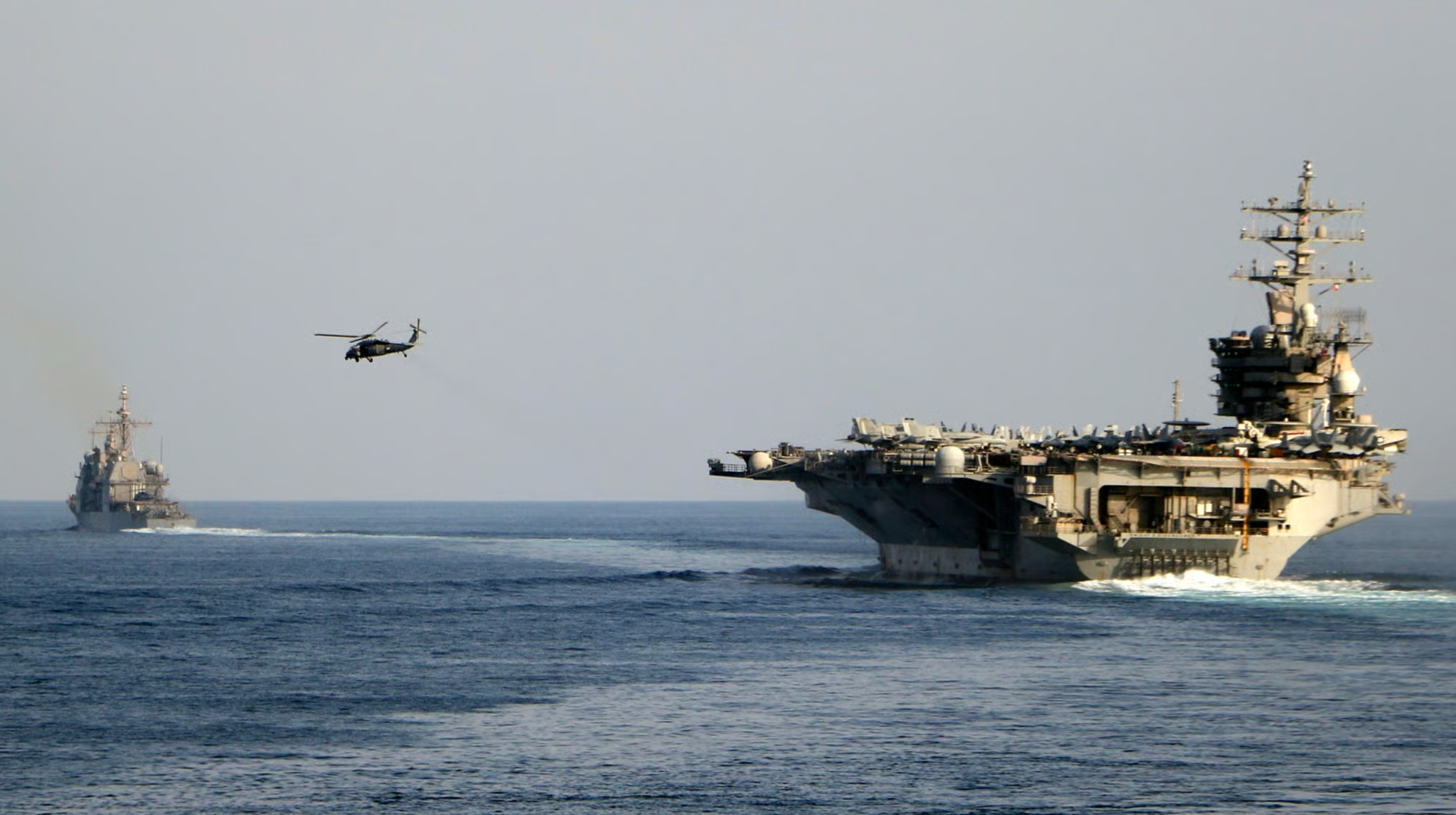
US warships cross the strait of Hormuz. The war in the Middle East propelled oil price rises and rattled stock markets around the world. Photo: US Navy
The Winners: energy exporters in an unexpected sweet spot
Three countries stand out as clear net beneficiaries: Brazil, Colombia and Argentina. Each captures the upside differently — and each faces its own set of complications.
Brazil: a net exporter caught in its own paradox
Brazil became a net oil exporter in 2014, and crude now represents 12.8% of its exports, which limits its vulnerability to an oil price surge and positions it as a direct beneficiary. But the political economy is more complicated. The Lula government has scrapped federal taxes on diesel and imposed a 12% tax on crude exports and a 50% tax on diesel exports, seeking to cushion domestic consumers. With a presidential election in October 2026 and tightening polls, Lula now has fiscal breathing room, but at the cost of deepening the structural vulnerabilities the IDB had already flagged before the conflict.
Colombia: the region's most exposed exporter
Colombia is the largest net fuel exporter in the region as a share of GDP, and Bloomberg Economics calculates that if the conflict pushed oil toward $108 per barrel, Colombia would register a boost of close to 0.8% of GDP in its trade balance. The windfall is real but structurally capped by a 2022 fiscal reform that reduced the link between international crude prices and Ecopetrol's financial results. It also lands squarely in the middle of a presidential campaign with a first round on 31 May.
Argentina: the double multiplier
Before the conflict, a $10 per barrel increase had already lifted Argentina's projected energy surplus by approximately $1.3 billion. The main constraint remains infrastructure: transport and evacuation capacity conditions the expansion of production, which limits the magnitude of the benefit from higher prices. The VMOS pipeline is the critical variable for converting the oil price windfall into actual export revenue by end-2026. On LNG, with Qatar having declared force majeure on its gas exports, Argentina finds itself positioned as a leading alternative supplier to Europe and Asia, as detailed in Edition #04 of Latinsight’s Strategic Briefing.
Panama: the unexpected infrastructure winner
Panama Canal Administrator Ricaurte Vásquez has stated that the Iran conflict could drive a significant increase in canal traffic as Asian energy buyers seek alternative LNG sources. If the conflict persists, Asian countries are likely to turn to US LNG suppliers instead of Qatar, and US shippers will use the Canal to shorten the route to Asia. Crucially, the canal is operating at full capacity, with a 50-foot draft every day since October, a sharp contrast to the drought-related restrictions of 2023-2024. Current daily traffic stands at 34 ships, with capacity to absorb an increase to 38. The Canal Authority will also open bidding next month for a $1.6 billion LPG pipeline, scheduled to open in 2031.
The Risk Side: Importers Under Pressure
Between 27 February and 9 March, the Chilean peso registered the largest depreciation against the dollar within the Latin American currency basket, falling close to 4.6%, the clearest market signal of the asymmetry at work. José Antonio Kast, inaugurated on 11 March at the peak of market volatility, has inherited an immediate external shock. For countries like Chile, Uruguay, Peru, and Central American nations, there is no fiscal capacity to absorb the impact through subsidies and the cost will be passed almost entirely to consumers.
The broader macro dimension is significant. Deutsche Bank characterises the overall market movements as reflecting a stagflationary shock marked by rising energy prices, higher sovereign debt yields, and a decline in most financial assets, with investors reducing the probability of rate cuts and beginning to consider possible increases in some economies. For Latin American sovereign borrowers counting on Fed rate cuts to ease refinancing costs, this is a material deterioration in the external financing environment.
🎯 Strategic perspective
The IEA has reduced its global consumption growth estimates for the year by approximately 25%, to 640,000 barrels per day. For Latin America, the decisive variable remains duration. In a short conflict scenario, exporters pocket a fiscal windfall, Argentina accelerates its LNG projects, and Panama captures a structural increase in transit traffic. In a prolonged scenario, the stagflationary dynamic erodes much of those gains.
For Brazil and Colombia — both in election year — the oil price is not just an economic variable. It is a political one.