Cuba: Pressure, Negotiations, and What an Opening Would Actually Mean
In early 2026, the geopolitical landscape surrounding Cuba has reached a point of maximum tension following a series of dramatic regional shifts. The Trump administration’s January 29 Executive Orderformally labeled the island a direct national security threat. This declaration has authorized a de facto naval blockade, including the inspection of vessels and secondary sanctions against any third party supplying Cuba with energy.
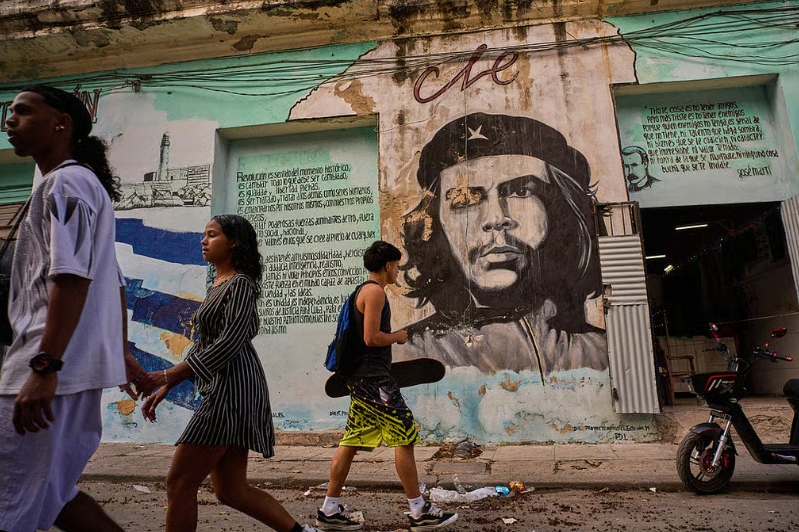
The US oil blockade is putting pressure on Cuba. Photo: Ramon Espinosa
The mechanics of the blockade
Following the US military operation that removed Venezuelan President Nicolás Maduro in January, the Trump administration cut off the flow of Venezuelan oil to Cuba and imposed tariffs against any country supplying the island with fuel. Mexico's PEMEX suspended shipments under US pressure. The humanitarian consequences have been severe: Cuba suffered three nationwide blackouts in March, compounding years of underinvestment in its energy infrastructure. Washington's stated objective is political change. Senior US officials have indicated the end goal includes the potential removal of President Díaz-Canel, though the commander of US Southern Command confirmed in March that no military invasion is being planned.
Can Cuba negotiate its way out ?
Three developments in the past two weeks suggest negotiations are moving, however slowly. Washington allowed a Russian oil tanker to dock in Havana on March 30 without intercepting it — a deliberate choice. On April 3, Cuba released 2,010 prisoners, its largest such release in years. And Díaz-Canel gave his first interview to a US television network on April 13, confirming that talks with Washington are underway, while describing them as "possible but difficult." Cuba's chief negotiator Josefina Vidal, who led the 2015 Obama-era détente, described the process as "very preliminary, with no structured negotiations yet."
What an opening would actually look like
The central obstacle to any Cuban economic opening is structural. GAESA, the military-run conglomerate, controls Cuba's most strategic sectors (tourism, retail, ports, remittances, financial operations), generating revenues 3.2 times greater than the entire Cuban state budget and profits equivalent to nearly 37% of GDP. The question analysts are asking is whether a genuine transition is possible without dismantling GAESA's grip.
A private sector does exist and is expanding. More than 11,000 private MSMEs have been approved since 2021, now contributing 23% of national tax revenues and accounting for the majority of retail sales. In March, Cuba published Decree-Law 144 allowing state enterprises to partner with private businesses for the first time, and announced measures permitting diaspora Cubans to invest directly in the island. Cuban economist Pedro Monreal describes this as a political signal of openness more than a structural reform, given that all partnerships remain subject to Ministry approval. The most likely near-term scenario is a managed partial opening: diaspora investment in MSMEs, selective tourism liberalisation, with GAESA retaining control of the commanding heights.
🎯 Strategic perspective
Drawing from the current crisis, three primary scenarios emerge for the remainder of the year:
Scenario 1 - The "Cubastroika" (Managed Transition): A limited agreement leads to the departure of President Miguel Díaz-Canel in exchange for sanctions relief. While the private sector expands through diaspora investment, the military elite and the Castro family maintain their grip on the strategic GAESA conglomerate.
Scenario 2 - Systemic Collapse and "Humanitarian Corridor”: Continued fuel blockades cause the failure of basic services and nationwide blackouts, sparking massive irregular migration. Under the guise of a crisis, the U.S. establishes a "humanitarian corridor" or "exclusion zone," facilitating a technical military entry without a formal invasion.
Scenario 3 - The Surgical Intervention: Following the Venezuelan model, Washington executes a limited "surgical" military operation or command-style strike to remove the island's leadership. This scenario carries the highest risk of triggering a full-scale mobilization under Cuba’s "War of All the People" doctrine.
The ultimate question for Cuba in 2026 mirrors the Venezuelan dilemma: as long as the regime retains control of its primary revenue source (GAESA) it can finance the security networks that ensure its survival. True transition may require not just political change, but the dismantling of the military’s economic empire