The EU-Mercosur Agreement Is Now in Force. Here's What It Actually Means.
After 25 years of negotiations, the EU-Mercosur Interim Trade Agreement entered into provisional application on 1 May 2026. It is the largest tariff reduction deal ever concluded by the European Union — covering 750 million consumers across two continents and unlocking more than €4 billion in annual savings for EU exporters once fully phased in.
For businesses, investors and advisors with exposure to Latin America, the question is no longer whether this deal will happen. It's what to do now that it has.
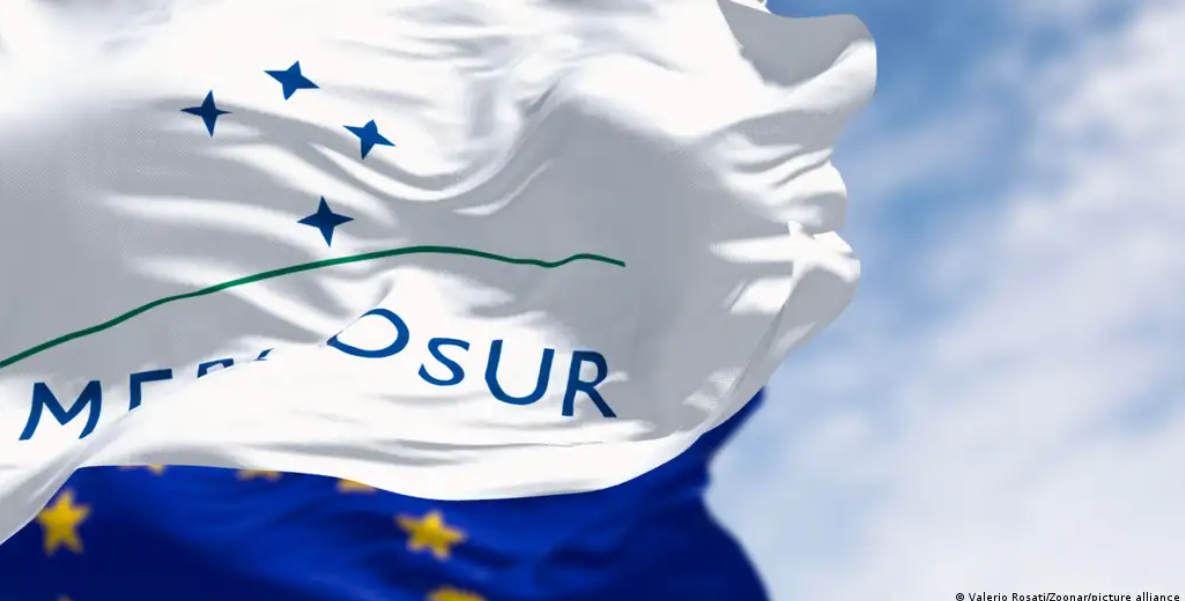
The EU-Mercosur agreement entered in force on 1 May 2026
What changed on 1 May 2026
The agreement is structured as two legally distinct instruments — a distinction that most coverage gets wrong.
The Interim Trade Agreement (iTA) is the part that entered into force on 1 May. It covers trade and investment liberalisation: tariff reductions, market access, investment rules and geographical indication protections. It required only EU-level approval — no national ratifications — which is why it could move quickly once all four Mercosur members completed their own ratification processes in early 2026.
The full Partnership Agreement (EMPA) — covering political dialogue, services and the broader cooperation framework — remains pending. It requires ratification by all 27 EU member states, a process that could take years. Based on the CETA precedent, a realistic horizon is 2028-2030 at the earliest.
The practical implication: some opportunities are available now. Others require waiting. Knowing the difference is the starting point for any strategic assessment.
Opportunities concentrated in strategic sectors
The EU-Mercosur agreement will bring business opportunities in several key sector
Active now under the iTA:
Automotive and machinery — Tariffs of up to 35% on European cars begin their phase-out immediately, reaching zero over 15-18 years. Car parts: immediate reduction. Brazil's energy infrastructure and Argentina's mining sector represent significant machinery market opportunities.
Agri-food and beverages — EU agricultural exports to Mercosur are projected to grow by almost 50%. Wines, olive oil, cheese and chocolate all see their Mercosur tariffs begin the elimination process. 344 European geographical indications are now protected across Argentine, Brazilian, Paraguayan and Uruguayan markets.
Pharmaceuticals and chemicals — The 14% pharma tariff is eliminated over 10 years. Brazil's federal health procurement market — worth billions annually — is now open to European bidders.
Public procurement — For the first time, EU firms can bid for public contracts in Mercosur countries on equal terms with local suppliers. Brazil's federal procurement market alone exceeds €8 billion per year.
Pending under the EMPA:
Critical minerals and energy — Export taxes on lithium, copper and niobium will be eliminated once the EMPA enters into force. A supply chain cooperation framework will be established, directly complementing the EU's Critical Raw Materials Act.
Financial and professional services — Market opening, digital trade rules and legal certainty for European service providers.
Subscribe to Latinsight publications to access the EU-Mercosur Business Opportunity Guide for free
Key safeguards
The agreement has attracted controversy — particularly from European farmers and environmental groups. A few facts worth having clearly:
The beef import quota is capped at 99,000 tonnes per year at a 7.5% preferential tariff. That represents approximately 1.5% of total EU beef production. EU sanitary standards remain fully applicable: hormone-treated beef and prohibited GMOs cannot enter the European market under any circumstances.
The EU Deforestation Regulation (EUDR), entering full force in December 2026, requires that beef, soy, coffee and cocoa be demonstrably deforestation-free to access EU markets — a requirement that applies regardless of the trade agreement.
The Paris Agreement on Climate Change is established as an "essential element" of the Partnership Agreement, meaning either party could theoretically suspend the deal in the event of a serious climate breach.
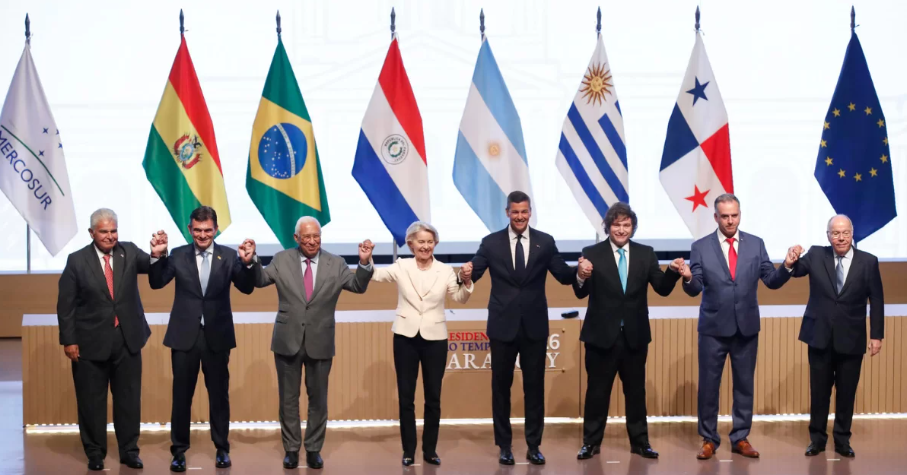
EU Commission President Ursula Von der Leyen and Mercosur countries head of state officially signed the agreement at the Asuncion summit in January 2026.
The strategic and political dimensions
This deal is about more than tariffs.
China overtook the EU as Mercosur's largest trading partner in 2023. The US is pursuing an increasingly transactional and bilateral approach to the region. Against that backdrop, the EU-Mercosur agreement is a geopolitical statement as much as a commercial one — an attempt to offer Latin America a rules-based, multilateral alternative grounded in shared standards rather than raw leverage.
The critical minerals dimension is particularly significant. The EU imports 82% of its niobium from Mercosur. Argentina holds the world's third-largest lithium reserves. Demand for lithium is projected to increase by over 1,500% by 2050. The EU's Critical Raw Materials Act cannot be delivered without Latin American supply chains.
A note on Chile
Chile is not a Mercosur member — but it sits at the centre of the deal's most strategic dimensions. The EU-Chile Interim Trade Agreement entered into force in February 2025, covering virtually all traded goods plus new chapters on digital trade, clean energy and critical minerals. Chilean ports are the primary logistics route for cross-border mining projects along the Andes — six times closer than Atlantic alternatives for projects like the Vicuña copper district on the Argentina-Chile border. The combination of the EU-Chile and EU-Mercosur agreements creates a near-seamless preferential framework covering most of South America’s GDP.
Access the full analysis
This article covers the main contours of the agreement. The detailed analysis — sector by sector, country by country, with a structured risk assessment and action points by reader profile — is available in the EU-Mercosur Business Opportunity Guide, a 25-page report published by Latinsight.